
How to Improve Your Credit Score in Mexico: Step-by-Step Guide
Learn practical strategies to boost your credit score in Mexico. Discover the key factors affecting your credit history and how to increase your chances of getting better loan terms.

A solid credit score is your ticket to better financial products in Mexico—think personal loans with lower rates, premium credit cards, and more negotiating power. Since banks and SOFOMs almost always check your historial crediticio before saying yes, keeping your score healthy is one of the smartest moves you can make.
The best part? Your score isn't set in stone. With consistent, responsible habits, you can turn it around over time.
What Exactly Is a Credit Score?
Your credit score is a three-digit snapshot of your financial behavior. It’s calculated based on how you’ve handled debt in the past—specifically your payment history and current credit usage.
Lenders use this number to gauge risk. A higher score tells them you’re reliable, which usually translates into faster approvals and better interest rates.
What Actually Impacts Your Score?
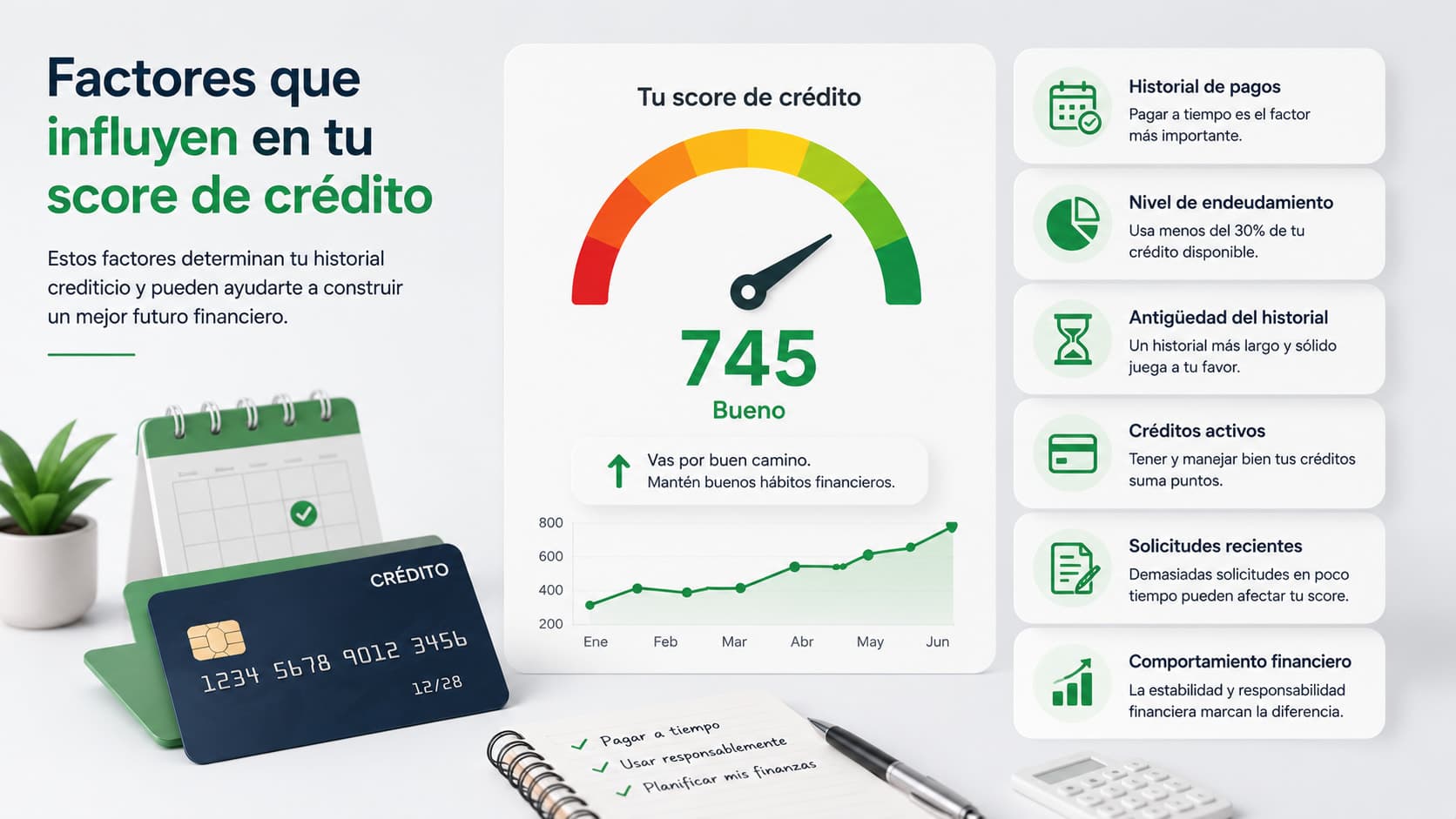
While every lender has its own formula, most Mexican credit models focus on these core areas:
- Payment History: Have you paid your bills on time?
- Credit Utilization: How much of your available credit are you using?
- Account Age: How long have your accounts been open?
- Debt Load: What is your total outstanding debt?
- Recent Activity: How many new applications have you made lately?
Stability is key. Erratic behavior is a red flag, while consistency builds trust with lenders.
7 Steps to Boost Your Credit Score
1. Never Miss a Payment
This is the big one. Your payment history carries the most weight. Even one missed payment can linger on your report for years.
Don’t leave it to chance:
- Set phone reminders a few days before due dates.
- Enable automatic payments (domiciliación) for fixed amounts.
- Sync your payment dates with your payroll cycle.
Paying on time, every time, is the fastest way to rebuild trust.
2. Keep Your Credit Utilization Low
It’s not just about how much you owe, but how much of your limit you’re using. Maxing out your credit cards signals financial stress to lenders.
As a rule of thumb, try to keep your balance below 30% of your total limit. If your card has a $10,000 MXN limit, aim to owe less than $3,000 MXN at any given time.
3. Don’t Apply for Everything at Once
Every time you apply for credit, it triggers a 'hard inquiry' on your report. Too many of these in a short window makes you look desperate for cash.
Be strategic. Shop around and compare options on platforms like Préstamo Hub before you officially submit an application.
4. Keep Old Accounts Open
Length of history matters. Closing your oldest credit card might seem like a good idea to avoid temptation, but it actually hurts your score by shortening your credit history.
If there’s no annual fee, keep the account open and use it for a small purchase every few months to keep it active.
5. Check Your Report Regularly
Errors happen. You’re entitled to a free credit report from Buró de Crédito once a year. Look for incorrect late payments or accounts you don’t recognize (which could indicate identity theft).
If you spot a mistake, file a dispute immediately. Correcting errors can give your score a quick bump.
6. Only Borrow What You Can Afford
Taking out a loan 'just because you can' is a recipe for disaster. Before signing, do the math:
- Calculate the exact monthly installment.
- Understand the total cost of the loan (including CAT).
- Ensure the payment fits comfortably within your budget.
7. Compare Before You Sign
Not all loans are created equal. A low monthly payment might hide a massive total cost due to a high CAT or hidden fees.
Always compare the APR, CAT, commissions, and terms. A few minutes of research can save you thousands of pesos.
Common Mistakes That Tank Your Score
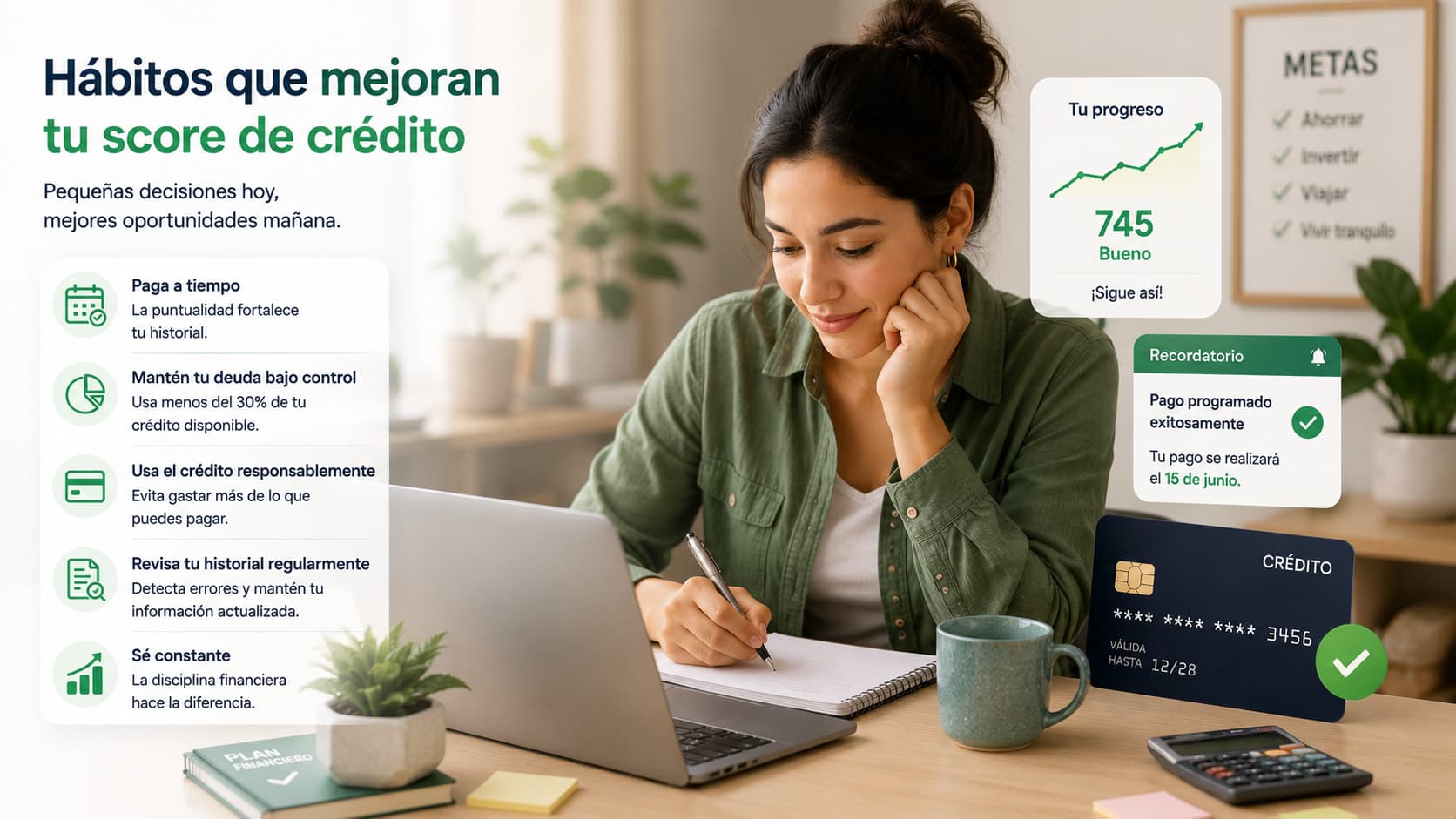
Avoid these traps that can set your progress back:
- Paying after the 'grace period' ends.
- Applying for multiple loans in a single week.
- Keeping credit card balances near the limit.
- Ignoring your monthly statements.
- Never checking your Buró de Crédito report.
How Long Does It Take to See Results?
Patience is crucial. There’s no overnight fix. Negative marks (like late payments) can stay on your report for up to 72 months in Mexico.
However, positive changes—like paying down debt—can start reflecting in your score within a few billing cycles. The key is consistency over months, not weeks.
Tips for Long-Term Credit Health
Think of your credit score as a marathon, not a sprint:
- Build a realistic monthly budget.
- Maintain an emergency fund so you don’t rely on credit for surprises.
- Live below your means.
- Read the fine print on every financial contract.
- Always shop around before committing to a lender.
Conclusion
Improving your credit score in Mexico is a marathon of small, disciplined steps. By prioritizing on-time payments, managing your debt-to-limit ratio, and comparing loan terms rigorously, you build a financial profile that works for you, not against you. Always analyze the CAT and total cost before taking on debt—your future self will thank you.
Related Guides
- How to Compare Online Loans in Mexico Without Costly Mistakes
- Mexico CAT Calculator: Estimate Your True Loan Cost
- What is a SOFOM? Understanding Online Lenders
Frequently Asked Questions
What is considered a 'good' credit score in Mexico?
There’s no single magic number, as each bank sets its own thresholds. Generally, scores above 700 are considered good and qualify you for the best market rates, while scores below 580 may limit your options or result in higher interest rates.
Can I improve my score quickly?
Quick fixes are rare unless you’re disputing a major error on your report. Most improvements from good behavior (like paying on time) take 3–6 months to show up. Be wary of companies promising 'instant' score repairs—they are often scams.
Does checking my own score hurt it?
Absolutely not. Checking your own report is a 'soft inquiry' and has zero impact on your score. Only 'hard inquiries'—those made by lenders when you apply for credit—can slightly lower your score temporarily.
Will taking out a loan automatically improve my score?
Only if you manage it perfectly. A loan provides an opportunity to build credit through consistent payments. However, if you miss payments or default, the loan will severely damage your score. It’s a tool, not a guarantee.
Sources & References
- Buró de Crédito: Official credit report and score information.https://www.burodecredito.com.mx
- CONDUSEF: Financial education and consumer protection resources.https://www.condusef.gob.mx
- Bank of Mexico (Banxico): Consumer financial education portal.https://www.banxico.org.mx
Ready to compare your options?
Download Préstamo Hub and compare loans from multiple providers in minutes.
Get it on Google Play